Home › Commercial Concrete Slabs and Flatwork
Superior Concrete Pittsburgh pours commercial concrete slabs and flatwork for warehouses, retail centers, and industrial facilities across Pittsburgh, PA. We deliver flat, durable slabs built for forklifts, racking, and heavy traffic. Our crews handle large pours efficiently so you get finished concrete floors and exterior flatwork on schedule.
Superior Concrete Pittsburgh provides professional commercial concrete slab throughout Pittsburgh, PA, Pennsylvania and the surrounding area. Our licensed, insured crew delivers safe, clean, on-time work with a free estimate before anything begins. Call (412) 223-8423 or request your free quote.
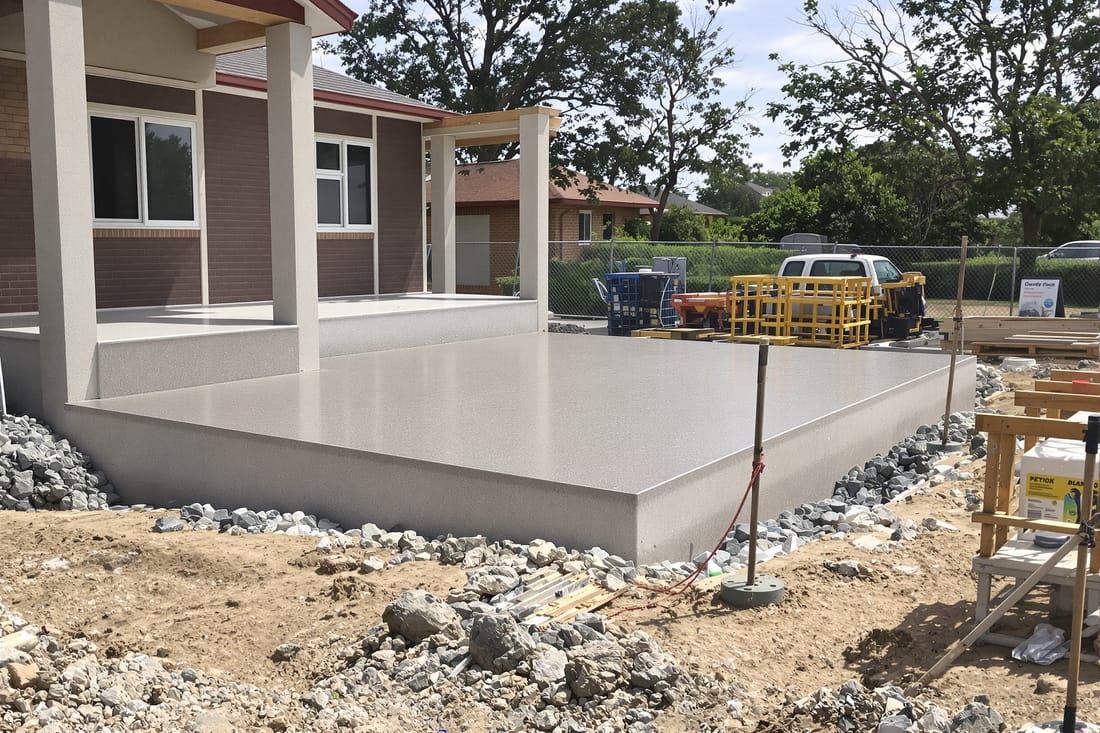
Commercial Concrete Slabs in Pittsburgh Built for Real-World Use
Commercial concrete slab work in Pittsburgh is not a one-size-fits-all service. At Superior Concrete Pittsburgh, we start by asking how the slab will actually be used. A warehouse slab that carries forklifts all day needs different thickness, reinforcement, and joint layout than a restaurant floor or a medical office. We talk through your operations, equipment loads, shelving layouts, and any future expansion you are planning so the slab design supports your business instead of limiting it.
On a typical project, we coordinate with your architect or engineer, or we can connect you with a local structural engineer if you do not have one. Together we confirm slab thickness (often 4 to 8 inches for light to moderate commercial use and thicker where point loads or columns are located), reinforcement type, and subbase specs. Pittsburgh has plenty of older fill sites, clay pockets, and sloped lots, so we pay close attention to geotechnical reports and on-site soil conditions. If needed, we bring in compacted stone base, soil stabilization, or drainage fabric so your slab is not sitting on soft or wet ground.
Local climate matters too. Pittsburgh freeze-thaw cycles, deicing salts in winter, and wet shoulder seasons all affect slab performance. That is why we recommend air-entrained concrete mixes for exterior flatwork and loading areas and pay close attention to proper water-cement ratio so the slab is durable instead of brittle. Our crews are used to working around Western Pennsylvania weather, which often means planning placements in windows where temperature and humidity are best for finishing and curing.
How We Install Commercial Concrete Slabs and Flatwork
A successful commercial concrete slab starts long before the ready-mix truck shows up. First we complete layout and excavation based on your site plan, then proof-roll and test the subgrade. Any soft spots are cut out and replaced with compacted aggregate. We aim for a uniform, well compacted base, typically 4 to 8 inches of crushed stone for interior slabs and thicker where heavy traffic or poor soils are present.
Once the base is ready, we place forms or, for larger interiors, use building columns and laser-controlled screeds to set elevations. This step controls slab flatness and levelness, which matters a lot for racking, machinery, and ADA compliance. At this stage we also set floor drains, sleeves for plumbing and electrical, and any blockouts for pits or machine foundations. Many slab problems start because penetrations were added last minute without a plan, so we push to coordinate those details before the pour.
Reinforcement comes next. Depending on the design, that might be rebar in a grid pattern, welded wire mesh, or macro synthetic fibers mixed into the concrete. For heavy warehouse slabs in Pittsburgh, a common approach is a combination of rebar at column lines and fibers to control micro-cracking throughout the slab. We tie rebar on chairs to keep it at the right depth instead of letting it sink during placement.
During the pour, our crew uses vibrators and rakes to consolidate concrete and avoid honeycombing. Screeding is done with straightedges or laser screeds to hit specified flatness. Finishing might be a simple broom finish for exterior truck aprons, a hard troweled finish for interiors, or a special slip-resistant texture for commercial kitchens and public entryways. We time finishing carefully, since working the surface too early can trap bleed water and create dusting or scaling problems down the road.
For commercial work, we pay close attention to curing and protection. That means curing compounds, wet curing where appropriate, and protection from early traffic. In Pittsburgh winters, we monitor temperature and may use insulated blankets, cold weather admixtures, or heated enclosures so the slab develops strength properly without freezing.
Flatwork Options: Floors, Parking, Loading Areas, and Walkways
Commercial concrete flatwork in Pittsburgh covers much more than just building floors. At Superior Concrete Pittsburgh, we install interior slabs, exterior loading docks, dumpster pads, parking lot slabs, sidewalks, and service yards, all tuned to how each area is used.
Interior commercial floors might be basic gray with sawcut joints, or they can be upgraded with higher strength mixes, hardened surface treatments, and prep for future coatings. For retail and office spaces, we can pour flatter, tighter slabs that are ideal for polished concrete or luxury vinyl plank. For industrial shops, we often recommend higher PSI mixes and surface hardeners to stand up to dropped tools, metal parts, and rolling loads.
Exterior flatwork like truck aprons, dumpster pads, and drive lanes needs to handle heavy point loads and the impact of plow blades and salt. For this work, we use air-entrained concrete and thicker sections, often 6 inches or more, with robust reinforcement and well planned joints. We also design slopes for drainage so water moves away from the building and does not collect and freeze at entrances or overhead doors.
Walkways, ramps, and access routes bring code requirements into the mix. We set slopes to ADA standards, pay attention to cross slopes and landings, and use slip-resistant broom or textured finishes that work in snow and ice conditions. Pittsburgh sees repeated freeze-thaw cycles, so we aim for details that reduce ponding water and allow easy snow removal by hand or with small equipment.
If you need a more finished look, there are options like integral color, exposed aggregate for exterior plazas, or decorative sawcut patterns that break up large surfaces without complicated forming. We walk you through what ages well in our climate and what might look good at first but cause maintenance headaches after a few winters.
What Drives Cost and How to Plan Your Budget
Commercial concrete slab pricing in Pittsburgh depends on several practical factors, not just square footage. Thickness and reinforcement are big drivers. A 4 inch lightly reinforced interior slab for an office buildout costs far less per square foot than an 8 inch heavily reinforced slab under a loading dock. Site conditions are another key factor. If we discover poor soils, inadequate existing stone base, or drainage issues, those must be addressed upfront to avoid slab failure, and they add to the initial investment.
Access and logistics matter in our city as well. Tight urban sites, limited truck access, and downtown work with restricted delivery hours can increase costs due to pumping requirements, staging, and extended labor time. In contrast, a suburban site with easy access for ready-mix trucks and equipment can be more efficient. Night or off-hours work to coordinate with other trades or keep your business open also impacts labor costs.
Concrete mix design and surface treatment are another piece of the puzzle. Higher strength mixes, corrosion inhibiting admixtures near loading docks, air entrainment for exterior slabs, and specialty finishes or hardeners all add a bit to the material cost but often save money in long-term maintenance. We go through these options with you instead of defaulting to the cheapest mix that might not hold up to your use.
We also talk openly about future-proofing. If you know you will add shelving, heavier equipment, or additional stories later, it can be less expensive to slightly upgrade slab specs now than to demo and replace or heavily reinforce later. Superior Concrete Pittsburgh is straightforward about value engineering opportunities, like adjusting joint spacing or changing reinforcement type, so you can meet your performance goals without unnecessary spending.
During estimating, we break down major cost elements such as subbase prep, vapor barriers, reinforcement, concrete volume, finishing type, curing, and sawcutting. That way you can see where your money is going and make informed decisions, rather than staring at a single lump sum with no context.
Avoiding Common Slab Problems in Pittsburgh and Why Local Experience Matters
Many commercial slab issues we get called to look at around Pittsburgh could have been prevented with better planning. Common problems include curling at slab edges, uncontrolled cracking, surface scaling, and joint spalling from heavy traffic and salt. At Superior Concrete Pittsburgh, we design and install with these risks in mind instead of treating them as surprises.
Curling and cracking are usually tied to slab thickness, joint layout, and moisture differences between the top and bottom of the slab. We manage this with proper joint spacing and depth, correct placement of reinforcement, realistic slab panel sizes, and consistent curing. For example, on large warehouse floors we may use doweled construction joints and fibers to reduce curling and keep joints tight under forklift traffic.
Surface issues are often related to finishing and winter conditions. Working bleed water back into the surface, finishing too early, or failing to use air-entrained mixes outdoors can lead to dusting and scaling after a few winters. We train our finishing crews specifically for our climate and schedule pours when conditions allow proper finishing and curing, or we bring in cold weather protection when deadlines require winter work.
Drainage and joint detailing are also critical in our region. In exterior slabs, if water is allowed to sit in joints or at door thresholds, repeated freezing and thawing will break edges down. We set elevations so water runs away from buildings and use joint sealants or detail changes where appropriate. Around high traffic areas like service entrances or dumpster pads, we design thicker slabs and more robust reinforcement to handle abuse.
Local experience matters because Pittsburgh has a mix of hills, older industrial sites, and variable backfill conditions. A design that works on a flat greenfield lot outside another city may not perform the same here. Our team has poured slabs in tight South Side alleys, on redeveloped brownfields along the rivers, and in suburban business parks, so we understand how to adjust details for each type of site.
If you are planning a new commercial concrete slab or flatwork project in Pittsburgh or the surrounding area, we are happy to walk your site, review existing conditions, and talk through practical options. That early input often prevents delays and costly changes later, and gives you a slab that keeps working long after construction crews are gone.